
Hit By A Distracted Or Texting Driver In Las Vegas?
A driver looking at a phone is a driver not looking at you. The proof is sitting in their call logs and app data right now, and it does not stay there forever. Erik Severino moves fast to lock it down before the insurer can argue it away.
- We subpoena and preserve phone records fast
- No fee unless we win your case
- Free, confidential review, available 24/7
- A local firm on St. Rose Parkway in Henderson
Talk To Erik Today
Takes about a minute. We respond fast.
We've Got Your Details
Someone from our team will call you shortly. For immediate help call (702) 360-5000.
The Proof Is In Their Phone, And The Clock Is Running
You were doing everything right. Then a driver who was reading a text, checking a map, or scrolling a feed drifted into you or blew through a signal. Now you are hurt, your car is wrecked, and the other driver is already telling their insurer it was just a normal fender bender. It was not. They made a choice to look away from the road.
What makes a distracted-driving case different is where the proof lives. It is not only in skid marks and witness memories. It is in carrier records, in app activity, and in the device itself. The Nevada Department of Public Safety and agencies like the Nevada Office of Traffic Safety treat distracted driving as a serious threat for a reason, and the law backs that up. The catch is that this evidence does not sit still. Carriers cycle out detailed logs, and phones get wiped, so the first job is speed.
Erik has spent more than 20 years taking on insurers and big corporations across Clark County. He knows how to get a preservation letter out the door the same week, how to frame the subpoena so it reaches the data that matters, and how the Eighth Judicial District Court tends to handle these cases when an insurer refuses to deal fairly.
"Erik and team were so very helpful and led me the whole way through this. They were very honest and knowledgeable about the process and what was needed. They took any of the worry I had about this and put it to rest. I’m glad I chose them for this process!"
Building The Record Before They Erase It
A distracted driver leaves a trail. Our job is to find it and protect it fast, then stack the pieces so a denial cannot stand. Here is where the proof comes from.
Cell Phone Records
We subpoena the carrier for call logs, text timestamps, and data usage around the moment of impact, which puts a clock on what their phone was doing.
App And Device Data
Texting, navigation, streaming, and social apps leave a trail. We pursue the device data and the in-app activity that lines up with the crash time.
The Citation
A handheld-device ticket from Metro or NHP is a piece of the puzzle. We tie the officer's findings to the physical evidence at the scene.
Vehicle And Camera Footage
Event data recorders, nearby business cameras, and traffic cameras can show no braking and a sudden, late reaction that fits an inattentive driver.
A Broken Safety Rule Is The Backbone Of Fault
Nevada makes it illegal to hold and use a device to text or browse while driving. That rule lives in NRS 484B.165, and it draws a clear line: hands-free use is allowed, but reading and sending texts behind the wheel is not. It is a primary offense, so an officer can pull a driver over for that alone. When a driver crosses that line and hurts someone, the violation does real work in a claim. It shows the driver ignored a duty the state set down to keep the rest of us safe.
A citation from Metro or the Nevada Highway Patrol is a strong piece of that. When an officer writes a handheld-device ticket, it is the state's own record that the driver was breaking the law at the time. A ticket doesn't prove fault on its own, so we never lean on it alone. We pair it with the carrier records, the device data, and the way the crash physically happened. Tied together, the citation stops being a loose claim and becomes a documented fact.
This matters most on the roads where these crashes pile up: the merges around the Spaghetti Bowl, the long stretches of US-95 and I-15, the surface streets in Summerlin and Green Valley where a glance at a screen is enough to miss a stopped car. A driver who looks down for two seconds at highway speed covers the length of a football field blind. The law treats that as the avoidable choice it is.
The harm from that kind of hit is rarely minor. People who get rear-ended at speed on the 215 or T-boned at a Boulder Highway intersection often end up at Sunrise Hospital or St. Rose Dominican for imaging and follow-up, and the bills stack up fast. We line up your treatment records with the phone evidence so the demand reflects the full picture, not the trimmed-down version the adjuster would rather work from. The sooner that record is built, the harder it is for the other side to argue your injuries away.
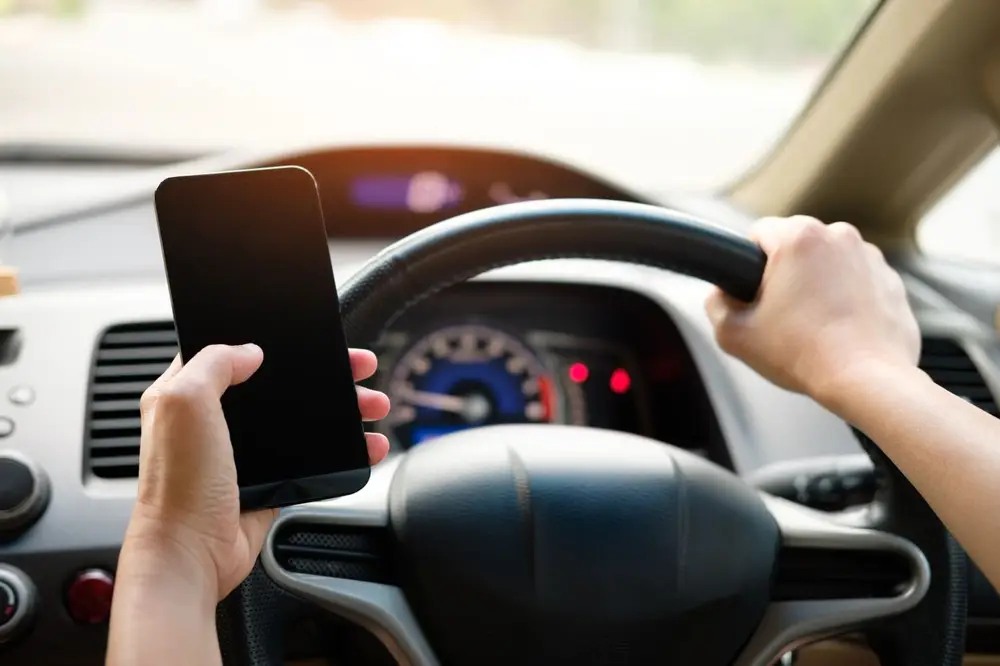
Late Reactions Hit Hard
A distracted driver often never brakes, so the impact lands at full speed with no warning. That tends to mean serious harm, even when their car looks fine. These are the injuries we see most.
- ✓Whiplash and neck strain
- ✓Concussion and head trauma
- ✓Herniated and bulging discs
- ✓Broken bones and fractures
- ✓Shoulder and knee tears
- ✓Facial and dashboard injuries
A Choice Is Treated Differently Than An Accident
Here is the part insurers do not want you thinking about. There is a difference between a driver who made an honest mistake and a driver who chose to text, scroll, or watch a video while steering a two-ton car down US-95. A jury sees that choice. When the records show a phone in use at the moment of impact, the conduct looks worse, and that can support full damages and, in some cases, punitive damages on top. Punitive damages aren't a sure thing, Nevada requires clear and convincing proof of oppression, fraud, or malice, but a phone-in-hand timeline is the kind of record that puts the question on the table.
That is also why the other side fights so hard. The adjuster's playbook is predictable. First they call you sounding friendly and ask for a recorded statement, which they use to trim your claim later. You do not have to give one. Then they argue the impact was minor, that you waited too long to treat, or that you had a prior injury. Behind all of it, they work to keep the phone records out of the picture, because once a phone-in-hand timeline is on the table, the value of the case changes. Our job is to have that record ready before they ask, and to refuse the early lowball that is built to close your file cheap.
If their driver had little or no coverage, you may still have a path through your own policy. See how an uninsured and underinsured motorist claim works, and how it connects to your broader accident injury claim.

You Work With The Attorney, Not A Call Center
A lot of firms hand you to a rotating cast of case managers, and you never speak to the lawyer whose name is on the door. That is not how this works. Erik handles your case himself, from the first call through the final check, and he moves on the phone evidence early when it counts most.
No Fee Unless We Win
You pay nothing up front. Our fee comes out of the recovery, and we go over case costs with you before anything starts.
Available 24/7
Crashes do not keep office hours. Call nights, weekends, and holidays. Hablamos Español.
Local To Henderson And Las Vegas
Licensed in Nevada since 2006, Erik knows the roads, the agencies, and how the regional insurers operate.
"Filed in 2020. These were the best people to work with in this situation. I would recommend them to everyone I know."
Four Moves That Keep The Phone Proof Alive
You do not have to do this perfectly. Do what you can, and we will handle the rest from there.
Get Checked Out
See a doctor the same day if you can. It protects your health and dates your injuries.
Note The Phone
If you saw them holding or looking at a phone, write it down while it is fresh, and tell the officer.
Get The Report
Call police and get the event number. Any handheld citation in the report is worth keeping.
Call Erik Fast
We send preservation letters and start the subpoena before the records cycle out.
Under NRS 11.190, you generally have two years from the crash to file a lawsuit. But phone and camera data disappear far sooner, so the real deadline for the proof is much tighter. Talk to us early so a deleted record never decides your case for you.
Other Cases We Handle Like Yours
Distraction often shows up alongside another problem. Start with the one that fits what happened to you.
Distracted Driving Questions, Answered Plainly
Talk To Erik About Your Crash
Tell us what happened. We will tell you honestly whether you have a case, and we will start protecting the phone evidence right away. No pressure, no cost, no obligation.
Prefer to call right now?
(702) 360-5000Talk To Erik
We respond within the hour.