
Hurt In An Uber Or Lyft Crash In Las Vegas?
Rideshare coverage is its own maze. Whether Uber or Lyft pays at all turns on what the driver's app was doing the second the cars hit. Erik Severino sorts out which policy owes you, then makes them answer for the bills, the missed work, and the pain.
- No fee unless we win your case
- Free, confidential consultation, available 24/7
- Rated 4.9 across 400+ Google reviews
- A local firm on St. Rose Parkway in Henderson
Free, Confidential Consultation
Takes about a minute. We respond fast.
We've Got Your Details
Someone from our team will call you shortly. For immediate help call (702) 360-5000.
A Rideshare Crash Isn't A Normal Car Wreck
Las Vegas runs on rideshare. Uber and Lyft cars stack up at Harry Reid International, idle outside the casinos on the Strip, and weave through Green Valley and Summerlin at all hours. With that much traffic, crashes are common, and when one happens, you're left in a situation most people have never faced. You were a passenger with no control over the car. Or you were in your own vehicle when a logged-in driver clipped you. Either way, the question of who pays is far messier than a two-car fender bender.
Here's why. In a normal crash, one driver's insurer covers the harm. In a rideshare crash, the answer flips depending on what the driver's app was doing the instant the cars met. That single fact decides whether you're dealing with a small personal policy or up to a million dollars in commercial coverage. Insurers know this, and they use the confusion to push you toward the cheaper policy or to bounce your claim back and forth until you give up.
Erik has spent more than 20 years taking on insurers and big corporations across Clark County, including the companies behind wrecks tied to Uber and Lyft. He knows the playbook these companies run, how to pull the trip and app data that proves the driver's phase, and how the Eighth Judicial District Court of Clark County tends to handle these cases when they don't settle. You don't have to figure out the coverage maze alone.
Four Phases That Decide Who Pays
Uber and Lyft set their coverage by what the driver was doing the moment of impact. Nevada law ties rideshare insurance to the app period, so these four phases are the whole ballgame, and proving the right one is where your claim is won or lost.
App Off
The driver isn't logged in and is using the car for personal reasons. Uber and Lyft step away here, so only the driver's own auto policy applies.
App On, Waiting
The driver is logged in but hasn't accepted a ride yet. Nevada law requires the company or driver to carry at least 50,000 dollars per person and 100,000 dollars per crash for bodily injury, plus 25,000 dollars for property damage. That's higher than a bare personal policy, but a fraction of the active-ride coverage.
En Route To Pickup
The driver has accepted a ride and is heading to get the passenger. From the moment a request is accepted, at least a million dollars in combined coverage is required under Nevada law.
Passenger Aboard
A rider is in the car, from acceptance through drop-off. The same million-dollar combined coverage applies through the end of the trip, and it's where most passenger claims land.
The gap between phases is huge. A driver who's logged in but waiting for a request falls under the lower 50/100/25 tier, a fraction of the headline figure people picture. The second that driver accepts a ride or has someone in the back, the million-dollar combined coverage opens up. Rideshare companies and their insurers fight hard to place a crash in the cheaper phase, because the difference in what they owe can be enormous. The app keeps a precise timestamped log of every phase, and we request that record early so the truth of the moment is locked in. Which tier actually applies turns on the specific facts of your crash, so it's worth having a lawyer confirm the coverage before you accept anyone's version of it.
"I could not have been more pleased with my experience hiring Erik and his law team to assist me. Their competency, professionalism, communication and customer service were all top tier. They really went out of their way to help and work with me. I would give them the highest recommendation."

Three Kinds Of People Can File A Rideshare Claim
You don't have to be the rider to have a case. A logged-in Uber or Lyft driver can hurt people in several ways, and each one has a route to the commercial coverage when the app was active.
- ✓Passengers riding in the Uber or Lyft
- ✓Drivers and riders the rideshare car hit
- ✓Pedestrians and cyclists struck nearby
- ✓Riders hurt by a third driver's fault
If you were the passenger, you're rarely at fault for anything, which usually makes your claim the most direct. If you were in another car the rideshare driver hit, you'll be steered toward a smaller policy unless someone proves the app was active and pushes for the right coverage. If you were on foot near a casino or in a Summerlin neighborhood when a driver pulled over for a pickup, the same proof matters even more, because pedestrian injuries tend to be severe. And when a third driver caused the wreck while you were riding, you may have a claim against that driver and the rideshare coverage both. We figure out every angle so no source of recovery gets left on the table.
The Rideshare Insurer Playbook
Rideshare claims have their own version of the runaround, and it's worth knowing the moves before they're used on you. The first is the app-phase fight. The company would much rather your crash fall in the waiting phase, where coverage is thin, than the active phase, where it isn't. They'll lean on a fuzzy timeline and hope you can't prove otherwise. The app's own log usually can, which is why we go after it fast.
The second move is the bounce. A personal auto insurer and the rideshare commercial insurer each insist the other one is responsible, and your claim sits frozen in the middle while bills pile up. That standoff is a tactic, not an accident. Someone has to force the right insurer to own the claim, and that's a big part of what we do.
The third is the early lowball. An adjuster calls while you're still sore and offers a quick check that sounds fine until you learn what your injuries really cost. They'll ask for a recorded statement and use anything you say to argue you weren't hurt or that you share the blame under Nevada's fault rules. Every one of these moves has an answer backed by records, and our job is to have those records ready before the question is even asked.
The Proof That Wins A Rideshare Claim
Rideshare crashes leave a digital trail most wrecks don't. The right records, pulled early, are what tie the company to the coverage. Save what you can, and we'll chase down the rest.
- The trip receipt and ride history in your Uber or Lyft app
- A screenshot showing the driver's name, photo, and plate
- The exact pickup and drop-off addresses and timestamps
- The Las Vegas Metro or Henderson Police event number
- Photos of every vehicle, the road, and any street signs
- Names and numbers for other passengers and witnesses
- Your own medical records from the first visit forward
- The other driver's insurance and contact information
The app data is the centerpiece. The trip receipt, the acceptance timestamp, and the GPS log together show the driver's exact phase at the moment of impact, which is the fact the whole claim rests on. That data can get harder to obtain as time passes, so a preservation request sent early matters. We pair it with the police event number, the scene photos, and your medical records to build a timeline an insurer can't wave away. If you walked away with little more than your phone, that's often enough to start, because your ride history is sitting right there in the app.
You Work With The Attorney, Not A Call Center
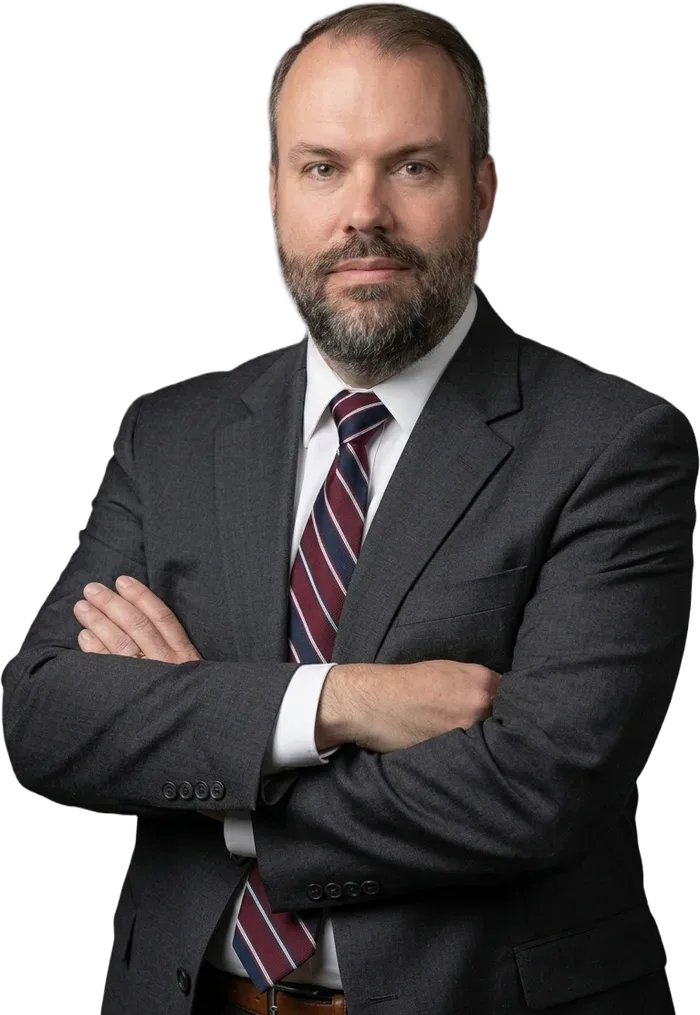
Plenty of firms hand you to a rotating cast of case managers, and you never speak to the lawyer whose name is on the sign. That's not how this works. Erik handles your case himself, from the first call to the final check, backed by more than 20 years taking on insurers and big corporations for Clark County clients.
No Fee Unless We Win
You pay nothing up front. Our fee comes out of the recovery, and we go over case costs with you before anything starts.
Available 24/7
Crashes don't keep office hours. Call nights, weekends, and holidays. Hablamos Español.
Local To Henderson And The Suburbs
We know Green Valley, Anthem, and Summerlin, the courts, and how the rideshare insurers operate. You can sit across a desk from your lawyer.
What To Do In The First Hour
You don't have to do all of this perfectly. Screenshot your ride, get checked out, and we'll handle the rest.
Save The Ride
Screenshot the trip, driver, and plate from your Uber or Lyft app before anything updates.
Get Checked Out
See a doctor the same day. It protects your health and dates your injuries to the crash.
Report It
Call the police and get the event number. The report pins down who was where.
Call Erik
We send the preservation request and deal with both insurers from day one.
Under NRS 11.190, you generally have two years from the date of injury to file a rideshare injury lawsuit. App and trip data can be purged sooner than that, so the real deadline to protect your proof is much earlier. Talk to us early so a missing record never decides your case for you.
Find The Page That Fits What Happened
Rideshare wrecks overlap with a lot of other crash types. Start with the one that matches your situation.
Rideshare Accident Questions, Answered Plainly
"Thank you so much to guide me trough all of the process Erik and his team are the best, profesional, fast, and excellent in everything, thank you so much"
Get A Free Case Review Today
Tell us what happened in your Uber or Lyft crash. We'll tell you, honestly, whether you have a case and which insurer should be paying. No pressure, no cost, no obligation.
Prefer to call right now?
(702) 360-5000Get A Free Case Review
We respond within the hour.